
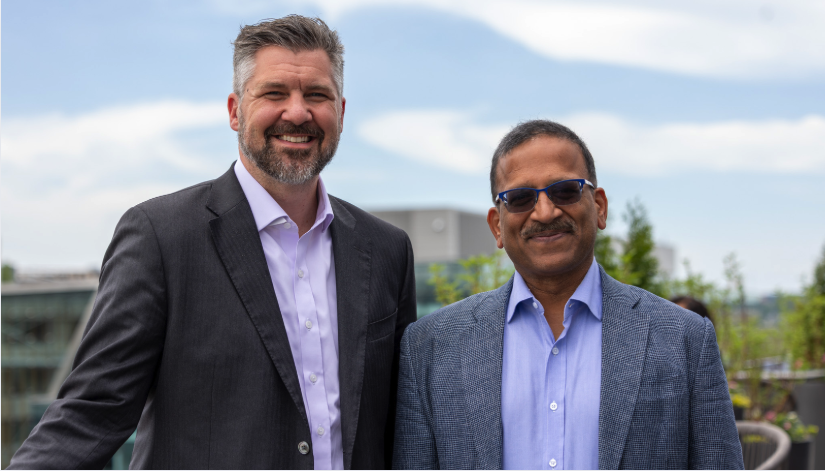
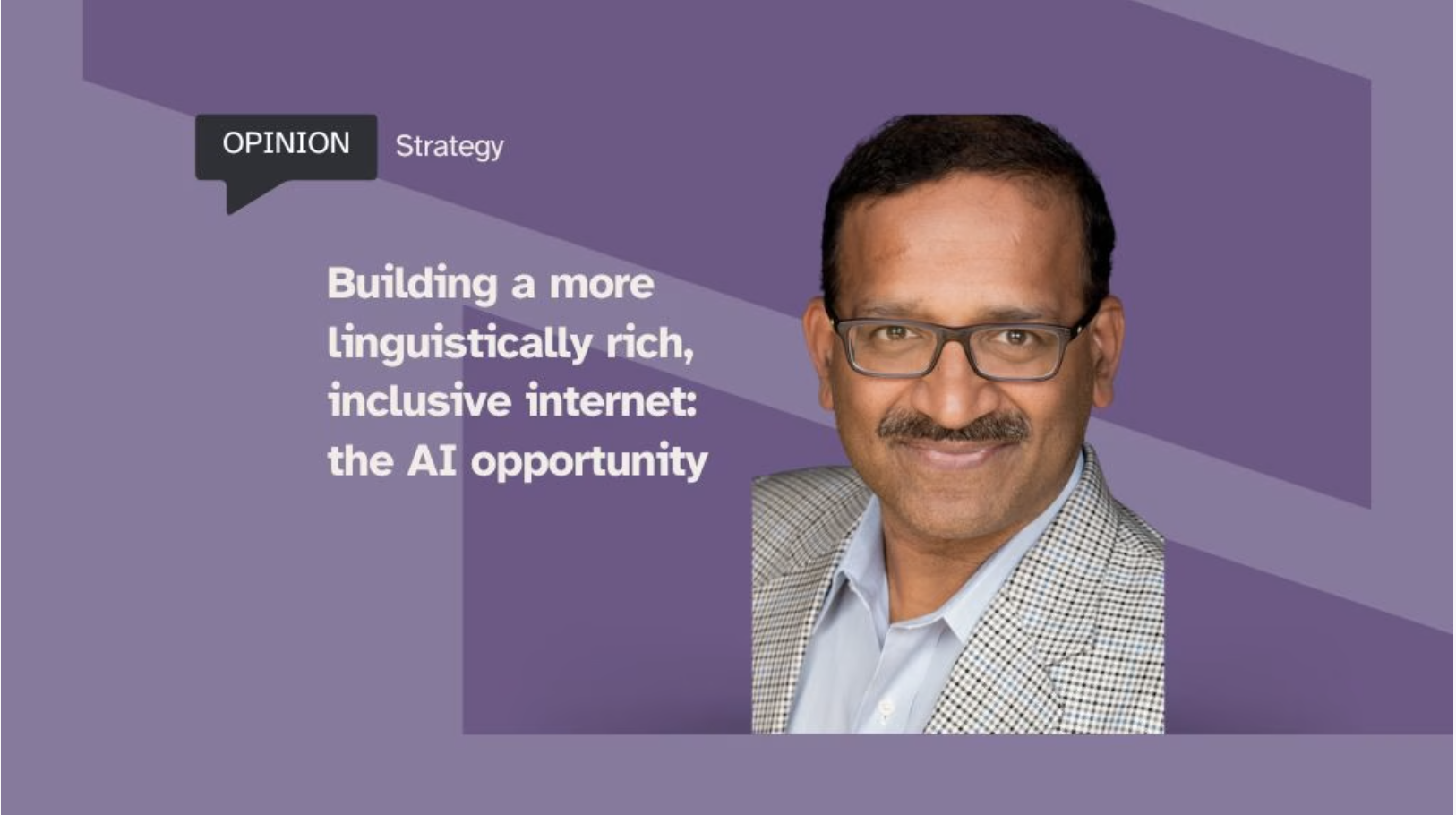
By Ram Mohan
Why CODI Is Joining a Global Commitment to Build a Multilingual AI Future
If you look at today’s AI models, you’ll quickly notice a stark reality: the vast majority of the technology shaping our future is built for a tiny fraction of the world’s languages.
Just seven languages dominate online content, and the large language models powering AI are even narrower, centered heavily on English and Chinese. That is not just a technical oversight; it’s a digital divide that risks excluding 3.4 billion people from the next wave of technology and making entire cultures digitally invisible.
I've watched this gap widen from the inside. Researchers, including Stanford's Sanmi Koyejo, have warned that without deliberate correction, the Internet risks collapsing into what he's called a "U.S.-centric culture blob", a digital world shaped by the data of a few languages and exported to the rest. It's already the direction AI development is heading.
That's the problem the Coalition on Digital Impact (CODI) was founded to address. And it's why today we are joining a new global commitment, convened by the Gates Foundation, that brings together 59 organizations across the AI ecosystem. The goal: helping an estimated 3.4 billion people use AI in their own language and voice over the next five years.
For too long, the tech industry has treated multilingual access as a basic translation problem. But true digital access goes far beyond translation. For AI to serve human beings, systems must understand how people actually communicate, accounting for their speech patterns, dialects, slang, idioms, and cultural context.
Scaling What CODI Started
For us, this commitment isn't a new direction. It’s the scale we’ve been working toward since day one.
Over the past year, CODI and our partners have been laying the foundation for what languages actually need to thrive in the age of AI. Through our Language Infrastructure Framework and our recently released Minimum Viable Dataset (MVD) Report, we’ve answered a critical question: What does a language need to participate meaningfully in AI?
This commitment doesn't replace that work - it gives it scale. It puts many of AI's biggest developers and funders in the same room, working toward a shared five-year goal instead of scattered, individual efforts. But scale only matters if it's matched by follow-through. We're calling on the technologists in this commitment to test their systems against low-resource languages, not just the dominant ones. We're calling on funders to treat linguistic inclusion as core infrastructure, not an afterthought bolted on after launch. And we're calling on platforms to open access so smaller organizations and language communities can build on what gets created.
We didn't join this effort just to sign a statement. We joined to bring CODI’s frameworks, research, and global community to the table, and to hold the industry accountable to a simple standard: every person deserves to navigate the digital world and use AI tools in their own language.

%20(1).png)


.png)

.png)




.png)
.png)
.png)
.png)

.png)
.png)

.png)


.png)
