
By David Castillo Parra and Christian Dawson
There are approximately 7,100 known living languages in the world, but AI’s most popular tools support fewer than 1% of them. ChatGPT, one of the most widely used AI systems, officially supports 59 of them. That gap is not a technical footnote. It is the defining challenge of the AI era.
AI is rapidly becoming the primary way billions of people access the Internet. It shapes how people search for information, access services, and communicate across borders. But these systems are only as inclusive as the data and infrastructure they are built on. In Sub-Saharan Africa, less than 12% of the population currently has access to AI. For many communities, the barrier is not only connectivity or affordability, but whether AI systems can understand, process, and serve users in the languages they’re most comfortable speaking. The communities left out today risk becoming permanently invisible to the next generation of AI systems.
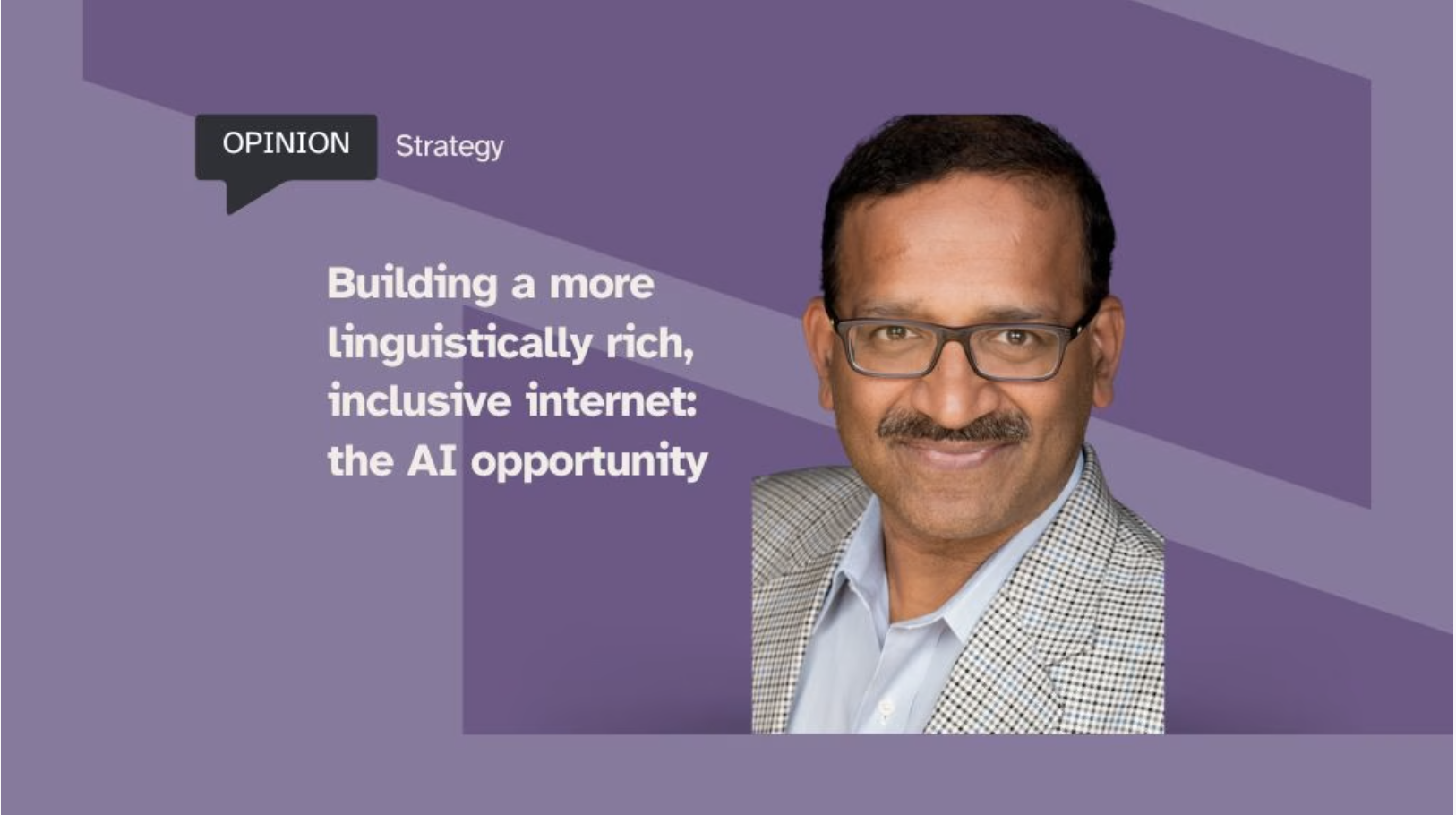
David Castillo Parra is an International Consultant at UNESCO for Multilingualism in Cyberspace, a member of the World Atlas of Languages team, and a member of the secretariat of the International Decade of Indigenous Languages (2022–2032). The views and opinions expressed in this capacity are his own and do not necessarily reflect those of UNESCO.
Christian Dawson is Co-Founder of the Coalition on Digital Impact (CODI.global), an independent, global coalition created to empower global communities to access and navigate the Internet in their native languages. He is also the Co-Founder of the Internet Infrastructure Coalition (i2Coalition).
Read the full article.


%20(1).png)



.png)

.png)





.png)
.png)
.png)
.png)

.png)
.png)

.png)


.png)
